Back
B2B
ENTERPRISE SAAS
PRODUCT DESIGN
SYSTEMS DESIGN
Redesigning task workflows for an ERP platform
Transformed task management with enhanced visibility, automated notifications, and efficient tracking. Achieved faster application processing and improved team performance.
ROLE
Lead Product Designer
TEAM
4 UX Desginers
3 Interaction Designers
1 Project Manager
TIMELINE
6 months
TOOLS
Figma, Figjam,

This project is under NDA
Some details have been omitted for confidentiality. A complete walkthrough of the case study can be provided during a call.
//PROJECT OVERVIEW
Meydan Freezone is a business hub in Dubai that lets entrepreneurs and companies set up and operate within the free-zone. The ecosystem has 2 portals:
01
Their customer-facing portal (Frontstage) handles the entire application lifecycle, from company formation to ongoing management.
02
Behind the scenes, a separate Free zone executives portal (Backstage) drives the processing of those applications.

Bird-eye view of the ERP ecosystem
The employee portal had a task management layer and it was quietly failing.
Employees had no clear visibility into what they owned, deadlines passed without alerts, and application processing times ballooned as a result. Customers felt the lag on the other end.
This project was one workstream within a larger ERP redesign at Meydan.
The focus was rebuilding the task management experience from the ground up, giving employees clarity on ownership, leads visibility into team performance, and the whole system a shared sense of urgency it had been missing.
//THE PROBLEM
A system that made accountability invisible
The existing task management system lacked transparency and tracking, causing cascading delays in customer application processing. Nearly half of all tasks went overdue, not because teams weren't working, but because the system gave no one clear ownership or visibility.
45% of tasks were overdue at any given time
Customer applications took 5–7 days to process on average
No clear ownership model - task assignments were ambiguous
No timely notifications, so deadlines passed silently
Progress tracking was manual and disconnected
//GOALS
Four measurable targets
Reduce overdue tasks to under 20%
Push task completion rates above 80%
Bring average processing time down to 1–2 days
Improve user satisfaction scores via post-launch surveys
//RESEARCH
What users actually struggled with
Interviews with team members across departments surfaced three consistent pain points. A competitive analysis of leading task management tools reinforced where to focus.
Unclear task assignments - no single person felt responsible
No timely alerts - users only discovered overdue tasks reactively
Neither leads nor executives could gauge team health at a glance
Competitive analysis confirmed that the best-in-class tools shared three things: visual clarity, intuitive navigation, and automated alerts. We built our design principles around these.
//SOLUTION
Designing a system with logic, clarity,
and control built in
The solution addressed three layers of the problem:
How tasks get allocated / How information is surfaced / Who holds control at any given moment.
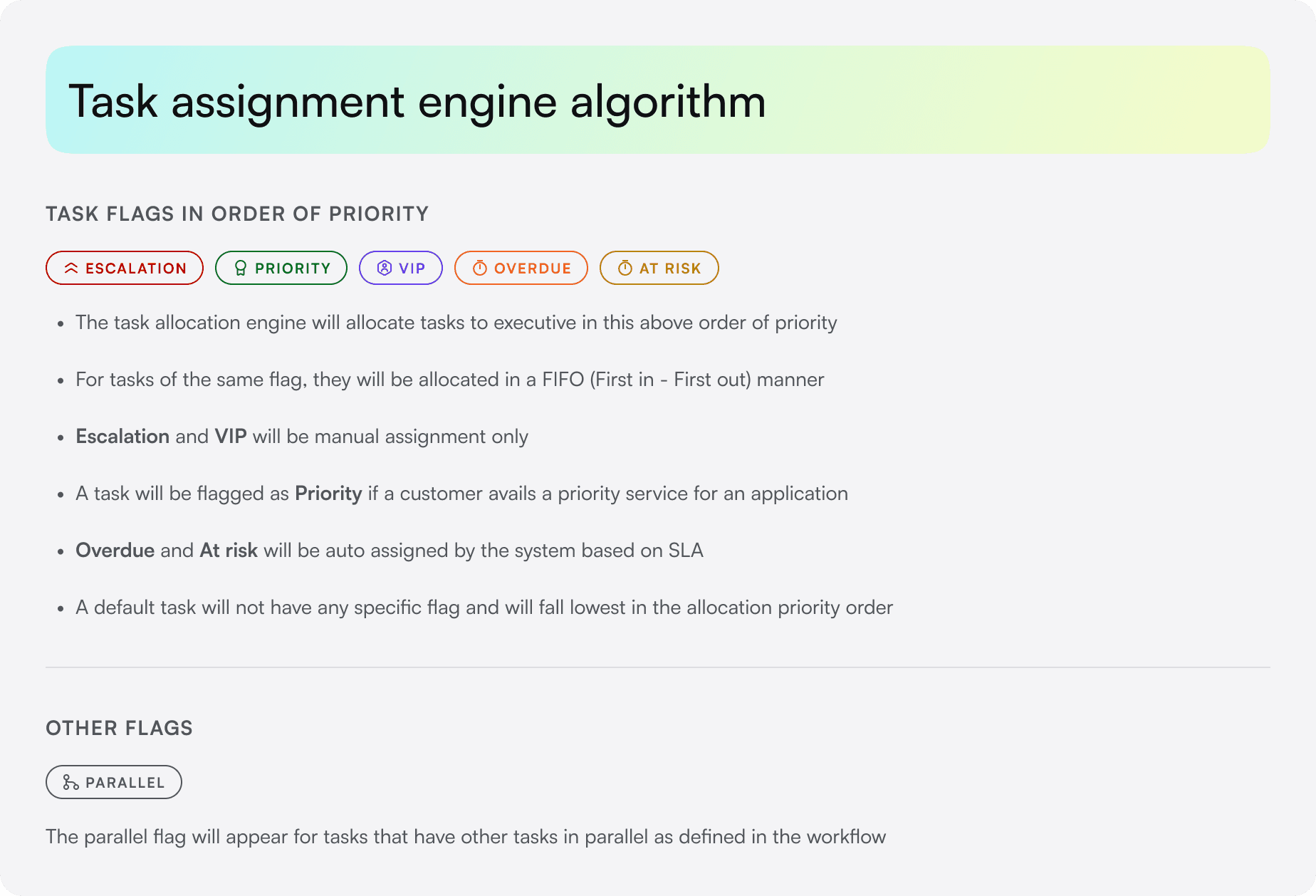
A priority logic that removes guesswork
The core of the system is an allocation engine that assigns tasks to executives in a defined order of priority removing ambiguity about what gets worked on first.
Tasks of the same flag are allocated in FIFO order — first in, first out
Escalation and VIP are manual-assignment only, reserved for Team Lead control
Priority tags can be auto-assigned by the system and manually overridden by Team Leads
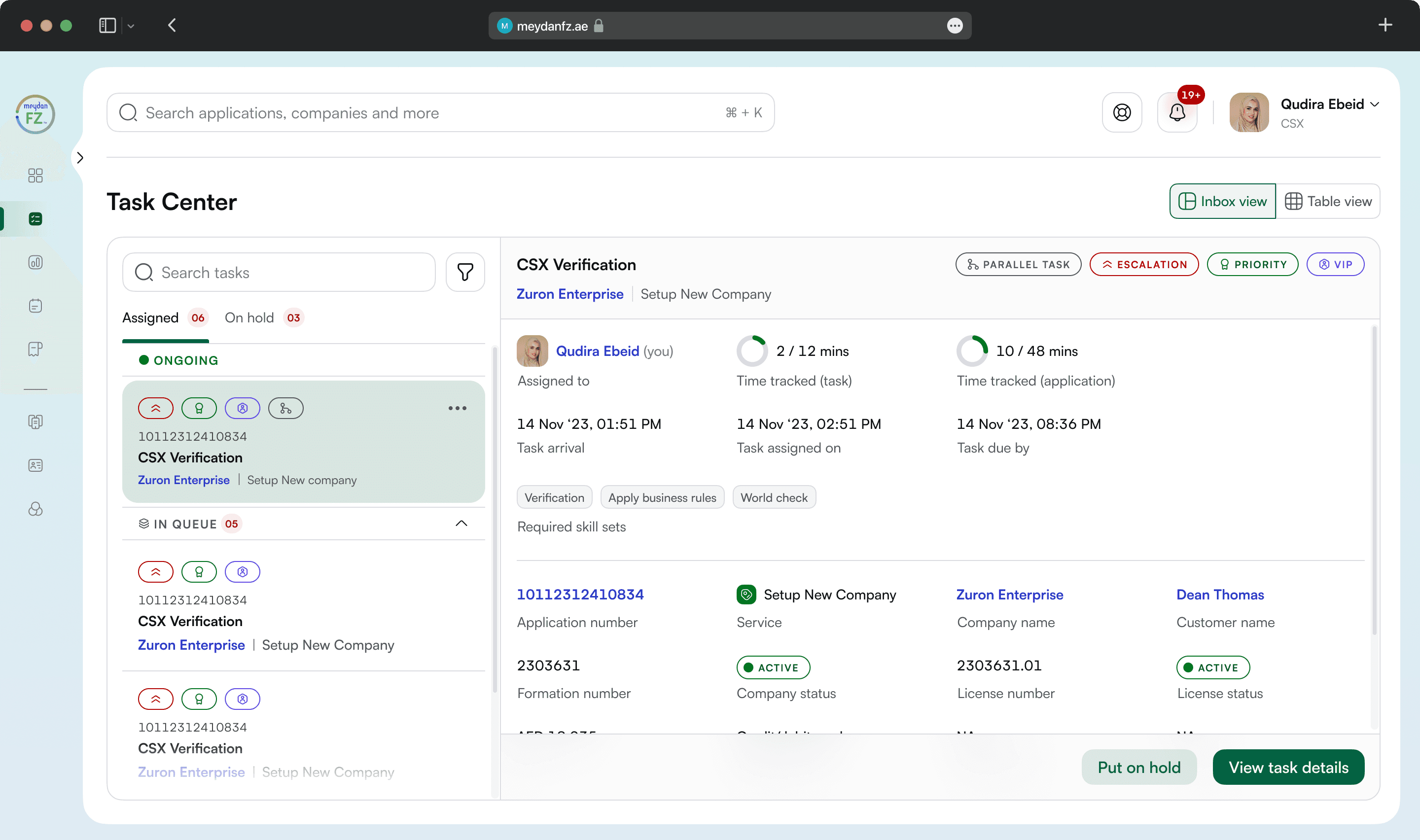
The right signals, visible at a glance
The task center was designed to give employees exactly what they need to act without digging. SLA status, task context, and actions are all surfaced upfront. Two view modes serve two kinds of users.
One active task at a time with a clear in-queue list — reducing context switching for focused users
Table view gives power users a compressed, scannable view of their full queue with sortable columns
When reassigning, team members can see the live workload of each colleague making it a considered, informed handoff rather than a blind one
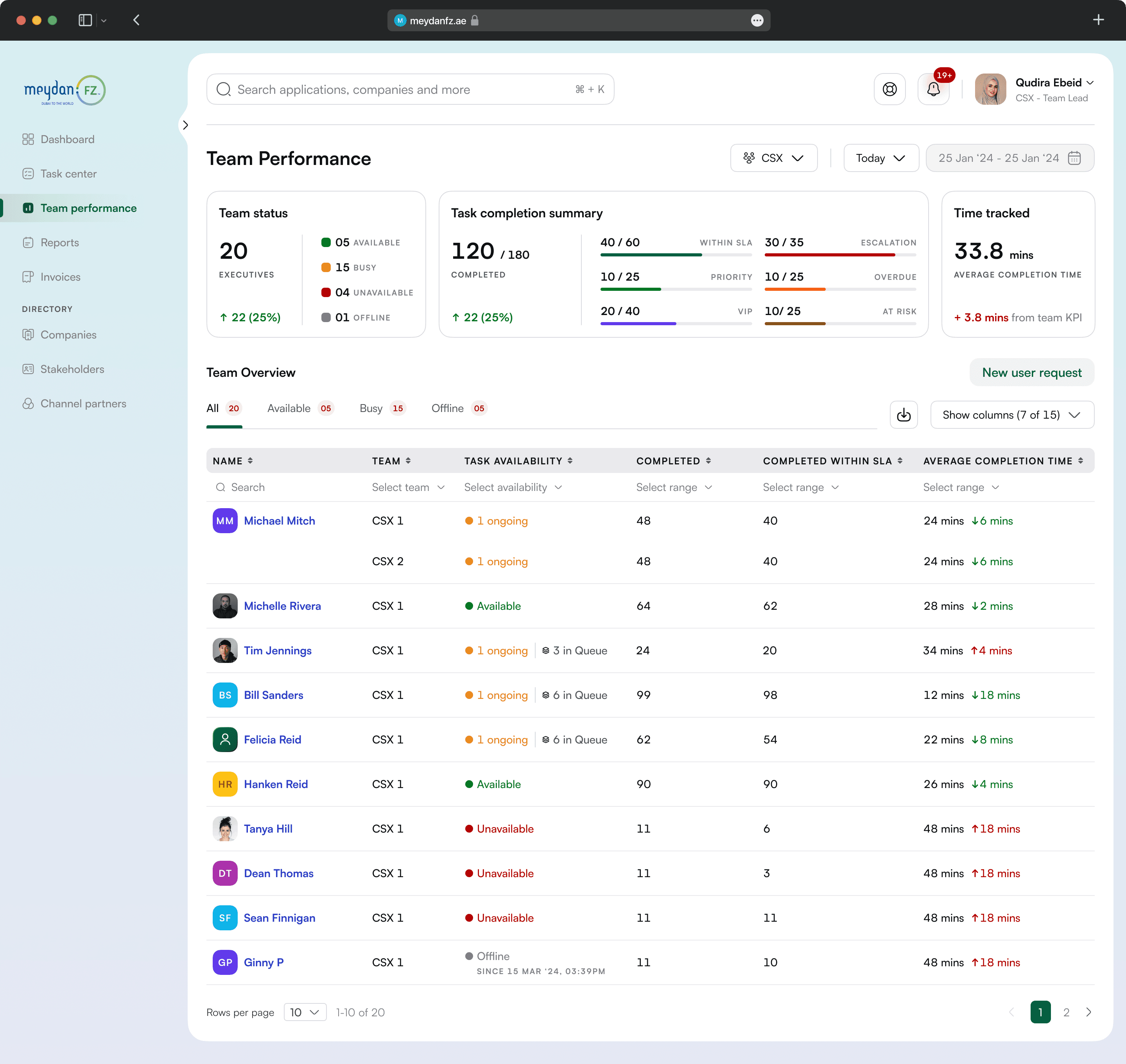
Oversight for team leads, without micromanagement
Team leads get a dedicated dashboard that surfaces the health of the entire team at a glance and lets them drill down to individual performance when needed. The goal was to give leads the context to intervene early, not just after something goes wrong.
Team-level stats give leads an instant read on overall health — completions, at-risk, and overdue tasks in one view
Individual rows let leads drill down to each member's workload and performance without switching screens
Designed for early intervention — leads can spot a struggling team member and redistribute work before SLAs are breached